
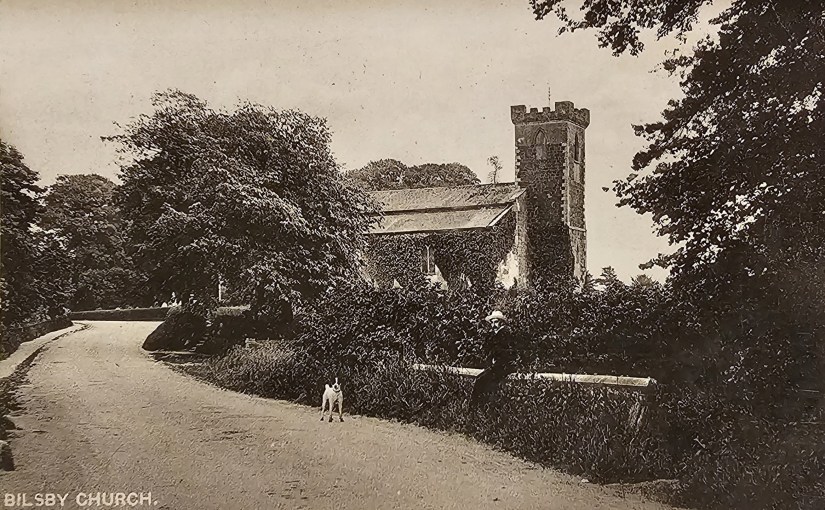
Bilsby is a pleasant village and parish with 453 souls and 2,960 acres 970 of which were in open fields until the enclosure in 1838. Whites Directory 1842
The above description fits with our nostalgic visions of Bilsby but in the early / mid- nineteenth century protest and pauperism had turned it into a battleground.
Incendiarism
About 7 O’clock an alarm was given that the Stack yard of John Rowell, of Bilsby , was on fire. On the arrival of the engines at the scene of conflagration , the flames had assumed a power that could not be arrested, as far as the stacks, and some beast sheds, were concerned and had the wind not providentially shifted no human power could have saved a vestige of the farmstead. The supply of water was inexhaustible, and it was conveyed to the engines with great order by the respectable labourers , amongst whom were many women and youths. Within an hour after the fire broke out not less than 1,000 persons were present ; yet while a number of poor women were to be seen drenched with wet, there were many stout men looking quietly on and making use of the most unbecoming language. No sooner was this awful scene of burning subdued , than Mr Rowell’s house was besieged in the most disorderly manner, and it was not until the constables were called in that order was restored: this scene of rapacity was followed up with drunken-ness and fighting until a late hour at night. The fire consumed a wheat stack containing about eighty quarters, a seed stack, a straw stack and a part of the agricultural buildings; the house was with much difficulty saved by means of wet blankets. … There seems to be no doubt that the fire was the act of an incendiary. Source: Stamford Mercury Friday 29th December 1843
This wanton destruction appears at odds with the quiet village life often associated with Bilsby. Newspaper reports on the incident were widespread but they did not reveal the exact nature of the grievance held against the Bilsby farmer John Rowell. Virtually all reports noted that the blaze was the work of an incendiary, a phrase which provided a deeper meaning than the obvious and required no further explanation at the time.
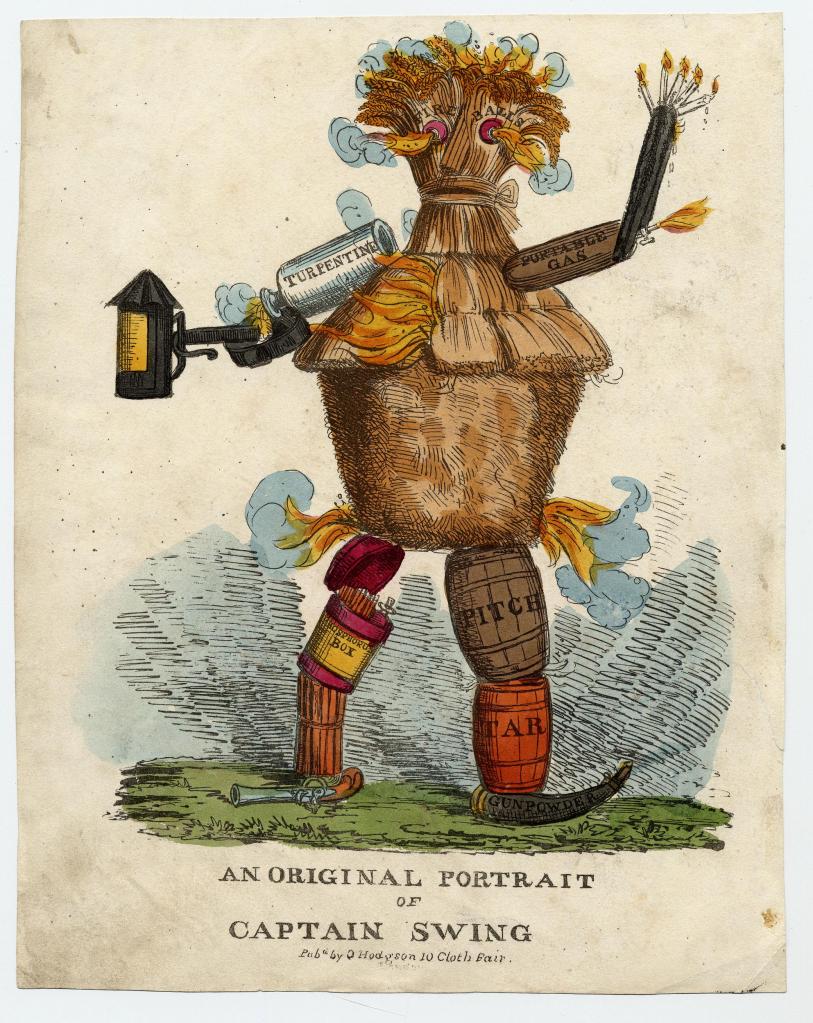
Incendiarism was a National problem going back the depression of the 1830s. Agricultural labourers, protesting against low wages and loss of work to threshing machines, threatened arson against stacks and machinery if their demands were not met. Some used the pseudonym Captain Swing to sign the blackmail letters thus identifying themselves with the movement. Swaby, Cawthorpe, Ulceby, Saleby, Thoresthorpe and Thurlby suffered incendiarism at the time. The Bilsby incident differed in the brasen nature of some of the crowd.
The Rowell family were among the seven main landowners of the parish, John Rowell appears on the list of subscribers to the Alford Association for the Prosecution of Felons in 1834. He farmed his own land in 1841 the household consisted of John Rowell, his wife and daughter, three farm labourers and two farm servants. The reports and outrage rumbled on throughout January.
Incendiary Fire £350 Reward
Whereas some person or persons did on the morning of Friday the 22nd day of December [1843] wilfully and maliciously SET FIRE to a WHEAT STACK standing in the stack yard of Mr John Rowell of Bilsby … several other stacks and a large beast shed, the property of the said John Rowell were destroyed.
Notice is hereby given that a Reward of £100 from her Majesty’s Government, a further reward of £100 from the County Fire office … a further reward of £50 from the said John Rowell
And a further £100 by subscription from his friends and neighbours, making together three hundred and fifty pounds, will be paid, on conviction, to any person or persons who shall give such information and evidence as will lead to the conviction of the offender or offenders
And Notice is hereby further given that a communication has been received from the Right Honorable the Secretary of State for the Home Department, that he will advise the grant of her majesty’s gracious Pardon to any accomplice (not being the person who actually set fire to the property) who shall give such information and evidence as shall lead to the conviction aforesaid. Stamford Mercury Friday 12th January 1844
The intervention of the Secretary of State in a Bilsby arson attack seems unusual but the fire was far from the only issue. Through out the 1830s and 40s the area had been beset with crime, as the problems increased various elements of society strove to resolve the issues in various ways. The newspapers produced lengthy reports on the state of the poor pointing fingers at the government. Politicians, ever fearful of public revolt, built new workhouses and prisons. Friendly Societies and Temperance Movements increased and became important sources of peer support.
Causes of Distress
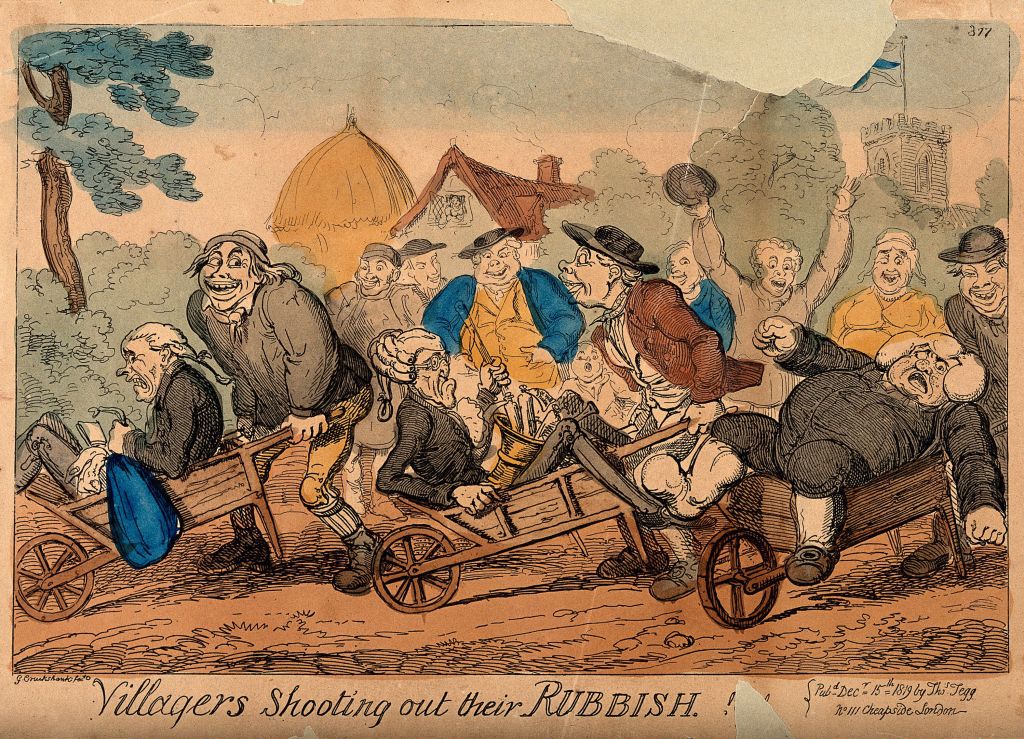
Many of those protesting blamed the local gentry, magistrates and overseers who were gaining more influence over their lives. The clergy frequently served as magistrates but in Alford and Bilsby there were two men who sought to improve the lives of the poor.
The Reverend William Mason, vicar of Bilsby and Farlesthorpe was known to be a great friend of the poor, “an eminently Christian man … devotedly the bishop and pastor of his flock … he was not a magistrate … not a poor law guardian though he was a guardian of the poor”. Morning Advertiser 1856
Rev. E Dawson, vicar of Alford (1808 to 1851) worked interchangeably with Rev Mason he also did not serve as a magistrate. The two worked in the parish baptising, marrying and burying their parishioners, they were well placed to know the hardships faced by those such as Robert Pinney.
Robert Pinney, a Bilsby miller and baker, lost his wife and three of his children in late 1837. The children had all been baptised by Rev Dawson, they were buried by William Mason. Typhus took the lives of George (9), Elizabeth (8) and Henry aged (4) in December along with their mother Martha (42). Robert’s father John Pinney nursed the whole family and was present at their deaths. Robert Pinney remarried Sarah Hill in 1840 but Sarah sadly died in 1850 (36). The 1851 census records Robert as a widower, his elder children Emma (20) and Arthur (14) are present along with his younger family by Sarah , Elizabeth (10), Lavinia (6), Georgiana (4), and Ann (1). The Bilsby miller had a house servant in his employ. Income offered no protection against disease but the agricultural labourers faced many times with no income.
Reverend Dawson wrote several tracts on the issues facing the poor in his own and the surrounding parishes. The Labourers Friend Society published his views on the causes of pauperism and distress along with his suggestions for improvement. Dawson was a strong advocate for the allotment system and the importance of allowing families access to land for subsistence growing, which he stressed was his own opinion born of observation.
It has for several years past been a generally received opinion in this neighbourhood at least that the great cause of pauperism, especially in the agricultural district, is attributable to the demolition of cottages [including those left standing and inhabited but the land had been removed] E Dawson 1833
In relation to the Bilsby with Thurlby parish Dawson noted that between 1770 and 1830 ten cottages had been demolished with just one replacement. Over the same period the poor rate had risen from £69 to £550, with an additional county rate of £36. Dawson goes on to underline the enormously increased expenditure on account of the poor along with
…the appalling increase in County Rates, … the chief cause of such increase is attributable to the increase of crime … the greatest number of offenders against the laws may be found amongst the poor. I cannot but conclude that as the demolition of cottages has produced a great increase of pauperism, so pauperism has generated crime. E Dawson 1833
While citing other contributory causes of distress such as the maladministration of the Poor Laws and the influx of Irish Reapers [before the potato famine] the Reverend Dawson’s suggestions for the mitigation of the problems were:
- More Land allotments an invaluable aid to the industrious poor
- Instant Employment when wanted either upon the roads … or in knitting sewing etc
- Improved arrangement of the workhouse
- Placing out poor children where they are better fed and better instructed than they would be at home [not always the case see Alford’s Chimney Boys]
- Taking home distant paupers especially in cases of desertion of families
But no plans, however good in themselves, will permanently succeed on bettering the condition of the poor unless those seductive nurseries of vice, and profligate consumers of the poor man’s earnings – the beer house – be duly checked
Finally the Reverend advised that a collection for the poor should be undertaken in the church, one stipulation regarding the distribution of the funds being that they should go to the distressed poor who receive no parochial relief and whose religious as well as moral conduct is satisfactory. An attempt to develop the Chief Causes of Pauperism and Distress E. Dawson 1833
It is worth noting that Alford was widely applauded for its allotment system but a request for an additional donation for the poor of the parish was met with outrage.
Enclosure was another important aspect of the problems in Bilsby. White’s Directory attributes 970 acres to the amount of open land enclosed by 1838. Newspaper notices connected to land enclosures related to common land and open fields first appeared in late 1836, the farmer John Rowell appeared on the list of land owners behind enclosure. Invitations for those who had an interest , or wished state a claim, on the common land appeared in 1837. Numerous meetings followed, discussions and decisions on the project. The agricultural labourers who had already lost land attached to their housing were now losing common land to the monied classes.
In February 1844 Sarah Desforges (widow) was fined 1s 6d with 1s damaged and 9s 6d costs for injuring fences at Bilsby. On February 1st 1844 Sarah’s son Frederic Joseph Desforges had been baptised. William Desforges, Sarah’s husband, had died at the end of October 1843 aged 29 in the Lincoln Lunatic Asylum. The family were cottage farmers owning land adjacent to a main Bilsby landowner John Taylor of Bilsby Hall. The dispute arose from an accusation of trespass by Taylor against Desforges, alleging the latter had built an out-house on the land of the former. A jury ruled for Taylor. John Shaw was charged with selling fencing at the same Alford sessions.
Poachers and Thieves
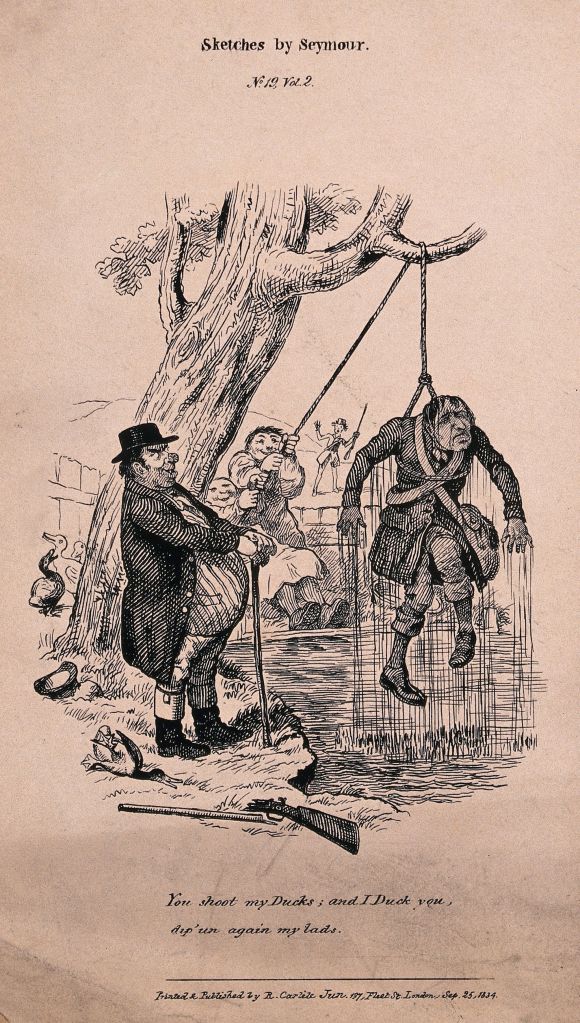
Despite the best efforts of those with power and influence crime continued to rise and in Bilsby the advantages of being slightly removed from the scrutiny of townsfolk and magistrates enabled criminals to organise.
Incendiarism had rumbled on from the 30s becoming widespread in the 1840s. In January 1844 a Leeds publication under the Chartist inspired heading “The Condition of England Question” included details of the Bilsby fire among many around the Country. Various contributions followed from influential society leaders describing the distressing state of living conditions among the poor, particularly the situation within workhouses. The rising cost of parish relief was not an inconsequential factor among the discussions, which had been raging for many years without resolution.
In line with the Reverend Dawson’s 1833 publication many agreed that the loss of land, which enabled a degree of self sufficiency during hard times, was a crucial factor. In 1834 the Poor Law Amendment Act paved the way for the harsher Union Workhouses. The loss of independence to petty overseers focused on keeping the poor rate down, while humiliating those in need of relief, can also been seen as an important factor in the rise in crime.
The gentry moved to the battue system ( driven game) large reserves were being created providing greater temptation and requiring more protection from keepers. As the number of keepers rose so did the number of poachers required to outwit them creating a warlike situation which became increasingly violent. These men were not just poaching for subsistence but also with an element of revolt.
In 1832 a “meeting” between three Bilsby poachers and JB Dashwood’s gamekeepers at Well resulted in serious injuries, the victory of the poachers was widely reported. The three men, William Lowe 24, William Hurton 24 and John Warmouth 20 were charged and held at Spilsby on January 5th before being acquitted on the 11th. All three were labourers.
Robert Roberts, a journalist at the time, later provided an indignant response to those denying the existence of Smugglers and poachers in Alford and Bilsby in the 1830s and 40s:
What about the Alford South End gang who shot one of Mr Christopher’s keepers dead, about two miles out of Alford ? and what about Louth poulterers who used to fetch cartloads of hares and pheasants away at once? These things were notorious RR Boston 1882
The murder of William Dadley, gamekeeper to RA Christopher at Well, in January 1839- attributed to the South End Gang – appears to have done little to curb the activities of the Bilsby Poachers. Poaching gangs were extremely organised and frequently armed, some having gained military experience in the Napoleonic wars. The poachers had the sympathy of their peers and regained a measure of independence.
A somewhat tongue in cheek report in the Stamford Mercury reveals a little more about the problems in Bilsby. While an official society existed at South Thoresby “foresters” became the go to description of the Mercury for poachers.
Alford – Committed to the Louth house of correction by the magistrates acting here, Lieut. Buck alias Bucknal, and Ensign Cade, (of the Bilsby regiment of Foresters) for marching in pursuit of game on the grouds of Wm. Loft Esq., at Trusthorpe. – Capt. Gording, of the same regiment was lodged in durance vile a month since, for a game trespass, he having a commission ( certificate to present fire) to kill game, which put him in a position to have the command of a strong corps of the night brigade. A non-commissioned officer of the same company (Bradshaw) had been committed a short time before for presenting arms in Woodthorpe Wood. Stamford Mercury 5th January 1844
Additional documents record that Joseph Bucknal and James Cade were imprisoned for poaching on 2nd January 1844. Both were agricultural labourers living in Bilsby. Joeseph Bucknal aged 30 was recorded as living with Abraham Desforges (Sarah Desforges’ father in law) of independent means in 1841.
James Cade, born Farlesthorpe, married Ann Grant of Bilsby in 1841. At the time of this offence they were living in Bilsby with two young children. John Bradshaw was committed for night poaching in November 1843. and is likely the same man who became Cade’s brother in law as Mary Grant of Bilsby married John Bradshaw in September 1844. The Grant girls parents were Benjamin and Ellen Grant.
The Spilsby Workhouse Union board were quick to intervene where men were imprisoned. On 4th January 1844 board minutes record an
instruction for the Bilsby overseer to examine and remove Ann Cade to her place of settlement. On 9th Jan they instructed that the Bilsby overseers should summon Benjamin Grant before the magistrate to explain why he was not contributing towards the support of his daughter Mary, now chargeable to the parish. Nine days later the board again directed that Benjamin be called before the magistrates to answer why he was not supporting his daughter now in the union workhouse. The daughter is not named but no children are mentioned so this seems likely to this refer to Mary. Mary Bradshaw died two years later aged 21 from Typhus her sister Ann Cade survived to her 40th year when she died of an infection related to child birth.
Alford —By the vigilance of our new police, John Bell, of Bilsby, forester, has been on suspicion of felony, been twice examined, and is remanded. A quantity of mutton was found on searching his privy vault.— The unceasing attention of the two police-officers sent down by the Secretary of State seems likely to be attended with the most beneficial effects, in breaking up one of the most extensive gangs of thieves in her Majesty’s dominions, as is shown by the numerous convictions which have taken place within the last few weeks, and with the probability of its being doubled in a much less time. How to account for this neighbourhood’s becoming such a focus of crime and disorder, is difficult, without reflecting on the habits and in- efficiency of those who should be teachers and guides, but whose lives are too often a negation of their doctrine, and an irreparable injury to Christianity. Had the introduction of the police been resorted to some years ago, the saving would have been great, both in regard to the expense of prosecuting offenders, and the maintenance of their families, the whole of which ultimately falls on the parishes. Though some little disorderly resistance was at first shown at the presence of the officers, their patience and admirable forbearance have had the effect of considerable reformation, particularly on the Sunday mobility, whose annoyance was become most intolerable. Stamford Mercury 19th January 1844
An article in March expanded upon the poaching gang and the legal support they were able to pay for. Working as a group these men had the funds to support each other they could reclaim a degree of sufficiency by mutual support.
On Saturday last two notorious characters Buck and Cade, being part of a gang which infest Alford and the neighbourhood (ten of whom, from the Parish of Bilsby alone, have suffered imprisonment or transportation during the present Winter) were, on their release from prison for poaching at Trusthorpe on Christmas day, again brought before the magistrates for a second offence committed at Hagnaby on the same day; the party to which they belong having anticipated the charge made a purse and determined to employ a young lawyer from Louth to defend these worthies. On the case being gone into this legal adviser undertook to show that a party of poachers may, on a Christmas-day go where they please from field to field and from Parish to Parish , even from light to dark and only be liable for one offence. The magistrates however decided against such law and the witnesses were called but from some cause or other (as yet unexplained) they failed in proving the offence. The prisoners were then advised as the only means of retaining their liberty a short time longer, to give leg bail and make off with all possible speed. The advice was followed and the police are again on the look out for the parties. Lincs Chronicle 15th March 1844
There had been concerns about a gang of thieves operating in the area for some time. It is unclear whether these were separate men or all part of the poaching fraternity, it is likely that at least some crossed over.
On Friday night a detachment of Louth police apprehended Robt Stephenson alias Theal of Bilsby, ( brother to Wm Stephenson who was hanged at Lincoln for highway robbery a few years ago) on suspicion of stealing lead from Bilsby church during the time it was undergoing repair. The lead (about 50 stone) had been, melted down and taken to Louth with a cart and horse belonging to William Gooding of the same place and there sold. Stephenson is a man of notoriety and has lately taken possession of some land by the way-side where he built a comfortable cottage and various offices well suited for his purposes: it is one of those houses of resort for which that place is so famed, for a game of cards and society. This probably led to suspicion but in mitigation of his character he regularly attended church twice a week, and a bible was always to be seen on the table by day and only gave place to the social glass and cards preparatory to evening parties. Stephenson is said to have confessed to this sacrilegious robbery and various are the reports connected to it. Our constables are on the further look out after the members of the Bilsby Shy Club who seem spoken of as pretty numerous: at all events depredation and misrule there seem to be ripening into a necessity for the more orderly inhabitants to exercise greater vigilance; at present it is evident that nothing is too heavy : mops pails porridge pots and all things portable are constantly changing hands and there is perhaps not a firm in the metropolis doing more profitably than Messers Dogberry and Cart : the vagrant mail plies daily between Alford and Claxby and thence to head quarters at Spilsby: and every passenger by it there set down costs the county from 15s to 20s for apprehending, feeding, mail-fare fees etc. 4th February 1842 Stamford Mercury
As the above report infers there were now a large number of people being transferred to the Union Workhouse at Spilsby. The last inhabitants of the Alford Parish workhouse were transferred to Spilsby in 1838.
The Workhouse and a Prison
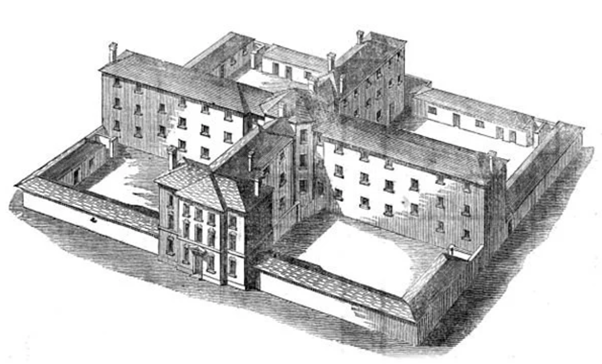
The new union workhouse at Spilsby became another focus for the Bilsby protesters in 1844. In 1838 there had been those who welcomed the idea.
Alford: on Saturday last the whole of the inmates of Alford Workhouse took their departure for the union workhouse in Spilsby. They all appeared very cheerful on the occasion especially the old inmates who anticipate great comfort for the future. 24th August 1838 Hull Advertiser
As an interesting aside an earlier article is one of the few to mention the parish workhouse at Bilsby, Elizabeth sounds like a great character.
On the 28th [Jan] was found dead in her apartment at the workhouse in Bilsby … Elizabeth Bruff,Spinster. Though she had long been quartered on the parish funds of Bilsby, £35 was found in her cupboard, tied up in a piece of old stocking, and it is thought she had other property elsewhere. – With the aid of two tame crows and a favourite hen she practised the occult sciences, for which she was in high fame amongst the frail damsels who search after destinies: two of these were the last persons that saw her alive, which was about 36 hours before she was found lying cold and stiff across the hearth of her apartment. 24th Feb 1832 Drakard’s Stamford News
There are some very intriguing aspects to this as Elizabeth must have had a room to herself, with a hearth , and yet the report cites her accomodation as being within the workhouse – more for a later date.
The Stamford Mercury followed and reported on the Bilsby issue at length, once more the writer(s) appeared to know a lot more than he was actually allowed to print.
Pauper Ascendancy
On Monday the 5th inst. a cavalcade consisting of 30 persons passed through [Alford] on their way to Spilsby Union workhouse, from Bilsby, a parish the population of which is under 600. Out of this number , the union house and the prisons together contain more than ten per cent of the inhabitants – a circumstance which has caused some excitement as well as sympathy amongst those unacquainted with the facts. These prove something of a more than ordinary character and lead to suspicion of an attempt to overpower the Union House and the parish funds, there being many small charge bearers ill able to meet the call to support the system.
The law in this matter seems to be defective in as much as some persons have been making sale of pigs, cows and other property subsequently to obtaining orders for the house. In one instance a man has left a pig feeding in the sty under the care of his father until this trial of strength is determined; and another reinforcement of inmates to the house is preparing to follow in the event of a favourable report.
Some of the men were very turbulent and abusive on the road, and though alleging that they were destitute of bread , did not pass a public house without drinking.
Such a state of things requires publicity to prevent the wrong impressions which so awful a case of pauperism is, without explanation, calculated to make. The true cause of the disorderly position which the poor of this parish have for some time exhibited certainly does not reflect much credit on its rulers, be they whom they may! Like fire and water the lower orders may be good servants but they are bad masters: and it would be well for those who assume the government to reflect on the responsibility which attaches to it. Stamford Mercury 16th Feb 1844
The attempt to overwhelm the workhouse was repeated a few months later, it was reported that the ” Bilsby experiment” had been revived when a party of 26 from Alford attempted to gain admission. All of the mischief makers were returned to their own homes by nightfall.
Alford authorities were fighting hard for a new prison to alleviate the problem in dealing with the large increase in crime.
Alford – The new prison, so much wanted , it seems by the two plans now with the Magistrates is likely to be a sorry affair. It is much to be regretted that a little private interest should not have been given up where the public good is at stake and that those who have to pay should have no voice in such matters; particularly after they have been compelled to contribute so largely towards stupendous buildings of the kind at Louth, Spilsby and elsewhere, embellished with more magnificence than gentlemen’s seats and at an enormous cost. What is most wanted here is a proper room for for the meetings of the magistrates, instead of assembling the people on such business at a public house, where it not unfrequently happens that the persons when brought forward to give evidence are in a state of inebriation very unfit to promote the ends of justice. Stamford Mercury Friday 26th January 1844
A Prison beyond these Shores
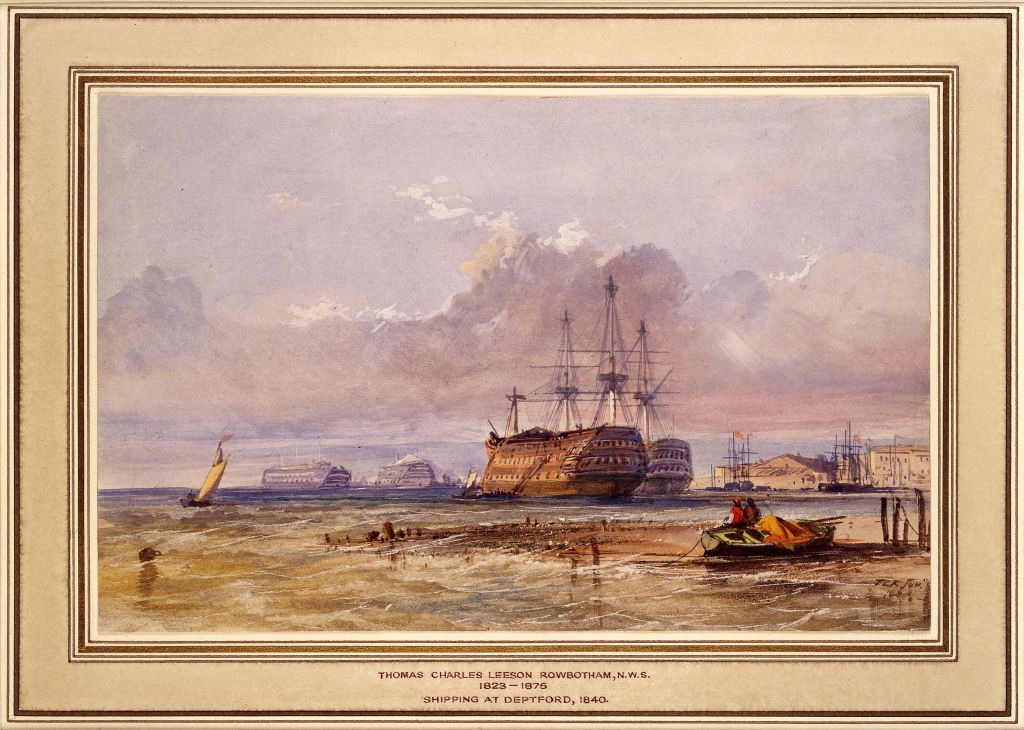
Inevitably some of the Bilsby criminal fraternity ended up being transported. After a quiet couple of months Bilsby sensationally hit the headlines once more in June 1844. An elderly couple and their son were brutally attacked, despite serious injuries all round the cuplrit escaped initially. Extensive searches led the police to Bilsby. Details of the incident ignited newspapers across the Country.
Shocking Attempt at Murder and Suicide. —Last Thursday evening week, a most brutal attempt was made stout blackguardly fellow, named Markham, to murder Jacob and his wife, who keep the toll-bar on the Spilsby road, about two miles from Louth. On Saturday night, the ruffian was apprehended at the house of Mrs. Desforges, widow, of some property, residing Bilsby, Alford, to whom was paying his addresses. He is about 40 years of age, and was apprenticed baker Louth, but afterwards being keeper at the Lincoln Lunatic Asylum, became acquainted with Mrs. Desforges, from her visits to her husband who was patient there… The prisoner, when he was arrested, was in bed, and when he heard the footsteps of the policemen on the steps, he hung his head over the chamber utensil and deliberately cut his throat with razor, inflicting tremendous gash about four inches long. Medical aid was immediately procured, and although he lies in dangerous state, it is thought he will recover. The reason assigned for his bloodthirsty conduct is a feeling of revenge has fostered towards Gainsley for having informed against brother of the prisoner for riding upon the shells of a waggon, the time the poor old man kept the Ashby toll gate. Gainsley, his wife, and son are as well as can be expected. Derby’ Courier June1844
The headlines rumbled on in relation to Markham’s case, he swiftly confessed but remained in at the home of Sarah Desforges until he could be moved. He was transferred to Lincoln Castle before the month was out. Markham’s defence relied heavily on his discharge from the army some years before with a diagnosis of epilepsy. The defence claimed that this disease of the brain had brought on an episode of insanity. Markham was sentenced to transportation.
The widow Desforges (born Epton) found herself in court again the following year charged with failing to look after her daughter Lucy Epton.
Lucy Epton of Bilsby, spinster, preferred a charge against her mother Sarah Desforges for refusing to maintain her. About 14 years ago [Sarah Epton] eloped into Holland with a Dutch sea captain. Having remained there for a short time , she returned to Bilsby, brought forth the complainant whom she kept to this time. The magistrates ordered her to apply for an order of admission to Spilsby Union. 4th July 1845 Stamford Mercury
In September 1846 Frederick died aged two. The death certificate shows convulsions uncertified as the cause of death. William Desforges gentleman is noted as the child’s father, Sarah’s mark appears on the death certificate as present at the death. In 1851 Lucy Epton died aged 18 in Bilsby. The Louth coroner later recorded her death as drowning during a fit. The Desforges widow remained in Bilsby, in 1851 Sarah is recorded as head of the household with her three sons George (13), Abraham (11) and William (9).
Desforges and Markham faced (and caused) distressing times as a result of illness and some circumstances beyond their control.
However the suffering of one Bilsby family surpassed many others. Undoubtedly it began in pauperism and for some led to crime, in July 1844 Albert Barnes became the third member of the family to be sentenced to transportation. The full story of the Barnes family will be posted shortly.
The problems in Bilsby continued for some time but 1844 was certainly a year of crime and protest. In 1847 Robert Stephenson – having previously stolen lead from the church – was arrested for the theft of five quarters of wheat.
… Long been known to belong to a gang of notorious thieves. In his cottage were also found a quantity of skeleton keys and various other instruments used by plunderers there is no doubt that he has been robbing the neighbouring farmers to a serious extent for some time past. Robert Pocklington a young man who Stephenson is supposed to have corrupted also committed as an accomplice. 2nd April 1847 Lincs Chronicle
Robert Stephenson was sentenced to 7 years and transported in 1851 along with a 4th member of the Barnes family. Robert Pocklington was sentenced to 2 years.
On 11th December 1856 the Reverend William Mason was waiting for a passenger train at Louth with his daughter. The side crank of a goods train engine caught hold of the clergyman’s coat, whirling him around and depositing him onto the platform. Death was instantaneous from a fractured skull. Bilsby had lost a beloved vicar and a champion of their poor.

