
The serialised version of Smuggling Times and the truth behind the tales
Alford: Smugglers Tales
The first discovery of a number of skeletons took place in July 1868 following the demolition of Buffham’s ancient thatched cottages in a section of the Market Place, known as the Butter Market. The ground was disturbed in preparation for the foundations of a new brick building and the remains of four skeletons were discovered just below the surface.
A brief newspaper report concluded that the state of decay was too advanced, and the remains too old, to form a judgement as to how the unfortunate victims met their end but “the curious place of interment suggests … scenes of violence were enacted at this singular spot” . Within a week the number of skeletons found had risen to ten, buried in various positions, one appearing to have been thrust into a hole as the remains were upright. The report notes that speculation in the town was rife as to the true story of the incident but unfortunately those stories were not reported.

Ten years later another of the town’s old inns was demolished, this time it was a stable that revealed its gruesome secrets. Murderous tales of old smuggling days began to be shared in print.
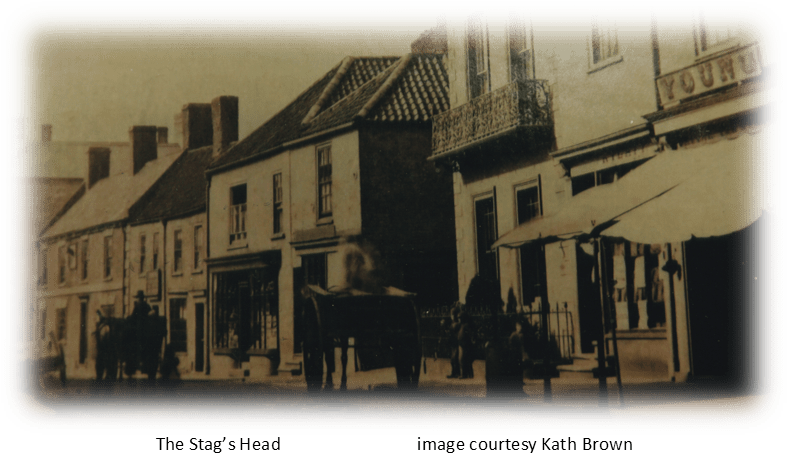
The demolition of the Old Stag’s Head public house in 1878 revealed two skeletons a foot below the surface of the stable floor The Hornes, as the locals called it, faced onto West St. The stables were situated to the rear in Park Road. The first skeleton had been laid out as expected with hands crossed but, upon lifting, it was discovered that a large portion of the back of the skull was missing. The second skeleton was buried below the first with far less care These stables had been erected in the early 1800s, reportedly the position of the remains led to the conclusion that they could only have been placed there after the completion of the building, although many years prior to their discovery. Further excavations discovered four more skeletons prompting a larger report on the incident.

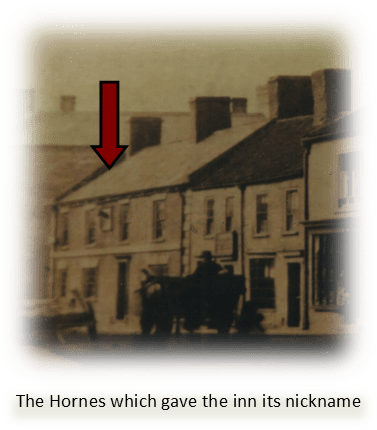
Martin Wilkinson had been the licensee of the Stag’s Head from 1803 to 1807 his son, Hurdman Wilkinson, was keen to share the tales he had grown up with and probably sought to defend his father too.
The story he recounted to the press was swiftly reported:
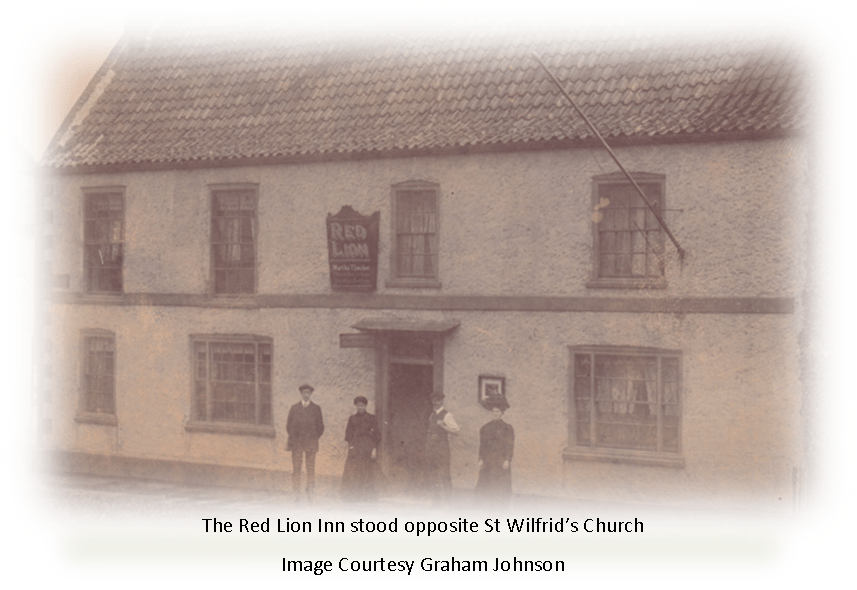
… the smuggling of gin from Holland was extensively carried out at the coast in the early part of the century, and at times the illicit traffic led to fearful scenes. One Autumn afternoon, says Mr Wilkinson, five carts of contraband hollands were driven into the Hornes yard. The smugglers [Dutchmen] disposed of one lot before sunset and the remainder was taken on to the Red Lion yard where it soon found buyers. The next day the Captain and mate of the smugglers craft returned to Alford to receive payment from their old customers. Settlement [took place] in his father’s bar, and then the men left to go to the Red Lion on a similar errand. From that hour nothing was ever heard of the Captain or the mate, who were relations, and owned the vessel in which they traded. At about the same time a commercial traveller left Spilsby for Alford, [he subsequently disappeared] and no trace of him could be found. Bow Street officers made strict enquiries , and also searched the Hornes premises and Buffham’s Inn (now Mrs Green’s, chemist) in the Market Place. Inquiries for missing men were made by similar officers more than once subsequently, and always without success. Some years ago we recorded the discovery of some human skeletons on the site of Buffham’s—one under the hearthstone and one built into a wall in an erect position. Stamford Mercury Nov. 1878.
Once captured in print the anecdotes recounted by Mr Wilkinson continued to be retold by the newspapers whenever other skeletons were found. Further findings were in 1881 at Bourne Place, close to a derelict hut rumoured to be haunted, and then in 1949, close to Buffham’s Cottages original site, by telephone engineers. In 1881, when the two skeletons were found at Bourne Place, Mr Wilkinson wrote to the newspaper once more with details of his story, emphasising that it had been related to him by his father and grandfather.
The find at Bourne Place revealed two bodies pitched into a hole, the lack of buttons and leather convinced Mr Wilkinson that all clothing had been removed, he felt certain that these were the two Dutchmen who disappeared. Family members had been to Alford looking for them at the time.
There are a lot more tales around, most have been passed down the generations and they are not [yet] backed up by documentation. Common stories include: tunnels from the Red Lion under the church to the George Inn, skeletons discovered at the Red Lion, and casks of liquor discovered upon the removal of the old toll bar to name but a few. In the early twentieth century the discovery of gold coins under a pantry floor in East Street was also believed to be connected to smuggling, the coins were dated between 1734 and 1828.
Although many Alfordians loved the tales others, who were working hard to improve the town, were keen to put the past behind them. An article in 1882 ignited a war of words about Alford in “ the olden days”. Retired writer and publisher, Robert Roberts of Boston, openly criticised 1830’s Alford as a “vulgar ignorant little town full of poachers and smugglers”
Understandably Mr Robert’s comments were met with an outpouring of anger and he was forced to answer his critics with more details:
I have been in Alford hundreds of times, and have often passed the “haunted house” at Bilsby – a fine old place, shut up because “Theer waur a boggle in it” I could tell [you] about Tothby Hall, Thoresthorpe, Thurlby Grange, and the other big farm houses round; also a good deal about the people who lived there. “No, smugglers and poachers !” What about the Alford South End gang who shot one of Mr Christopher’s keepers dead, about two miles out of Alford ? and what about Louth poulterers who used to fetch cartloads of hares and pheasants away at once? These things were notorious .
I, many times, passed the house of a family of smugglers between Alford and the sea, about thirty-five years ago. There was a father with several sons, all of whom got their living by smuggling. They had no other occupation; they dressed as well ,and spent as much money, as any people in those parts. They owned at least one vessel engaged in the trade. Everybody knew it. Why were they not caught? Because the whole countryside sympathised with them. An informer would have run a chance of being shot as dead as the Alford poachers shot the gamekeeper. I have heard many curious tales from the farmers – how they used to lie still at night when they heard smugglers fetch their horses out of the stables to lead away the cargoes, and how they used to find kegs of spirits in the morning put among the straw as recompense for the use of the animals. Some of them used to boast that they got all their spirits for “nowt”. On a dark night, suitable for running cargo, these farmers would send their household to bed earlier than usual, that the coast might be clear for the horses to be fetched. No doubt many of their men went with their teams. R.R. Boston 1882
The war of words regarding Alford’s past continued for some time but the above comments were never addressed directly. There are many, tales which will never be proved but seemingly smuggling was rife, and clearly the skeletons pointed to murderous activity but were the two really connected ?
The tales of Hurdman Wilkinson and Robert Roberts provide some very basic, unsubstantiated, information from the 1800s. They seem like a good place to start in a search for the truth.

 About Alford